

If you haven’t been dissociating from the news of the Epstein files (which I certainly have at times), you know that what is in the files is dark as f*ck. The more you fully engage and read, the more disbelief, horror, and rage you may feel. And when you see almost nothing by way of justice happening in the United States as compared to the rest of the world, you may feel helpless. The most palpable emotion amongst women I’ve observed has been rage, very understandably. And a hypervigilant lack of trust. The most common behavior amongst men I’ve observed has been avoidance, for various reasons. My hope in writing this is to provide some action for those men who feel called to take it. Action is not only the antidote to anxiety, avoidance and helplessness, but more importantly it’s the most crucial element of repair that I see missing in our culture, from men, re: violence towards women.
But first, to the women who may be reading, I am sorry. I am sorry many of you are being forcefully re-traumatized by this news. That you have to feel it viscerally in your bodies in the form of nightmares, flashbacks, intrusive thoughts, disgust, lack of safety, and all the aforementioned emotions. I’m sorry that it feels like you’re feeling this mostly alone, with many men demonstrating their apparent complicity through silence or lack of action. I’ve heard the call: you want men to stand up, say something, but more importantly, do something. This is what I hear from my female friends, colleagues, clients and loved ones. There have been so many articulate expressions of this pain recently, but one piece of writing I really loved was this one by Celeste Davis and I think it will resonate. It also cites other brilliant pieces written by women.
Now to the men: I know what many of you are feeling because I work with you, I am a man, and we’ve both likely been steeped in similar conditioning. What I see in the majority is avoidance. A “moving on let’s get back to work” kind of attitude, which is how a large majority of men have been socialized to deal with emotions generally. Additionally, those of us who are not survivors are not being forced to re-experience this in our bodies, if we even had any connection to our bodies in the first place (many men do not due to our conditioning). We have the privilege to ignore what most women cannot. There’s also a cohort, though, who is engaging further, but more quietly. They are feeling a lot of fear, anxiety, shame, guilt, confusion and helplessness. Folks are flashing back to #metoo. “Oh my god, women are really angry at men. They really HATE men. Are they coming after me? Let me compulsively check every past interaction I’ve had with women to validate whether I am or am not a part of the problem or THE problem. Men ARE terrible. I am bad and I hate myself. F*ck BAD men. What do I do?” Ugh. So…hypervigilant fear, compulsive checking, and hiding (flight). Shut down and shame (freeze). Full on rage + some projection (fight). And confusion/helplessness (more freeze). Therapy Jeff had a good take on this.
All of these emotions are valid and make sense. It’s a scary time. And yet “feeling bad” ain’t helping anybody. What’s really missing is ownership, accountability, and action. We men are afraid to own our part in this collective shadow of patriarchy and so we’re either stuck in fear OR are instead projecting by calling for the heads of those at the top without looking in the mirror, at ourselves, our friend group, family, or community - because then we would have to do something. If you’ve read more takes that you liked, please share them in the comments.
I personally find myself experiencing the full range. A part of me is horrified and disgusted by the severity, scope, and magnitude of it all - it’s haunting. A part of me feels helpless and sad that near nothing in the form of justice is happening. A part of me is also thrown back to childhood where an authority figure is raging, I’m frozen, and my sister is pissed that I can’t move (I’m 8). I don’t blame her, she needed backup. Another part of me feels guilty and ashamed of a past hypermasculine version of me that very much participated in a culture of objectification, discard, and plenty of locker room talk. AND I’ve integrated and healed enough to know that a raging, shaming, projection-filled tirade that will only push men further into the shadows and completely neutralize my effectiveness in being a part of the solution. I’ve tried this in the past and it does not work at all. Because that is a very real danger. #metoo did a great job of educating the culture on consent, sexual assault, and rampant abuses of power. In my opinion it moved our culture in the right direction, no question. And at the same time, it also sent many men further into the shadows only to act only more deviously (e.g. Epstein). “Justice” only goes so far in terms of repairing the wound, not to mention the underlying causes.
So, the fork in the road for men I see right now is a.) be so afraid of the anger in the air that you disown any responsibility and further push this all back into the shadows OR b.) have the courage to own your inherent part in it, take action, and integrate this all in order to heal both individually and collectively.
I choose path B. Walk with me…even if it is scary and uncomfortable AF.
ACTION 1: hold space for the women in your life right now
It’s not too late to bring this up, trust me. May even be better timing now that it’s somewhat out of the news cycle. Do ask for consent to talk about it, first, though. Not necessarily a conversation you can have in line at Trader Joes. This will help you actually feel the pain that’s coursing through our culture right now. Try to remain curious and not take their anger personally or get defensive. Of course, women are feeling a full range. From those that I know, many have also been avoiding and dissociating, some have been having nightmares and flashbacks, and some others are absolutely revolted and enraged by men everywhere, and don’t feel they can trust us. Can you blame them? I personally think it’s completely understandable.
ACTION 2: Educate yourself on the root of this violence
Patriarchy is at its core, a violent system. That may sound hyperbolic, but let me explain. One of the very first thing boys are taught, around middle school at the latest (if it hasn’t begun earlier at home), is to bully each other into submission to the conditioning that real men are superior to girls and superior to gay men. This isn’t new news to any man. To be those things is shameful, wrong, disgusting. P***, F***, B***. I still personally feel the sting of those in my body, and I hurled them plenty. Hate speech contemptuously brands misogyny and homophobia into young boys, whether they like it or not, or face social exclusion - threatening their belonging, the most important thing for a human nervous system. Hate speech already is violence, but even further, it is at this point that they begin to “kill” the parts of themselves that may appear “girly” or “gay” - e.g. emotions, playfulness, sensitivity. bell hooks says it best - “The first act of violence that patriarchy demands of males is not violence toward women. Instead patriarchy demands of all males that they engage in acts of psychic self-mutilation, that they kill off the emotional parts of themselves. If an individual is not successful in emotionally crippling himself, he can count on patriarchal men to enact rituals of power that will assault his self-esteem.” Starting here, many men learn to numb themselves, which enables them to disconnect from the pain of inflicting harm on themselves and others - because they can’t feel it. They are numb. This historically prepared men masterfully for war, sports, and business (all arena’s where sexual violence occurs at a higher rate, unsurprisingly). Anesthetized and with the enemy clearly targeted - the feminine within and without - violence becomes an inevitability (on a spectrum, of course). Nobody explains this better than bell hooks in The Will To Change, in my opinion. But another great piece is Masculinities, by Raewyn Connell. All of Terry Real’s books are a great introduction, too, but particularly I Don’t Want To Talk About It and US.
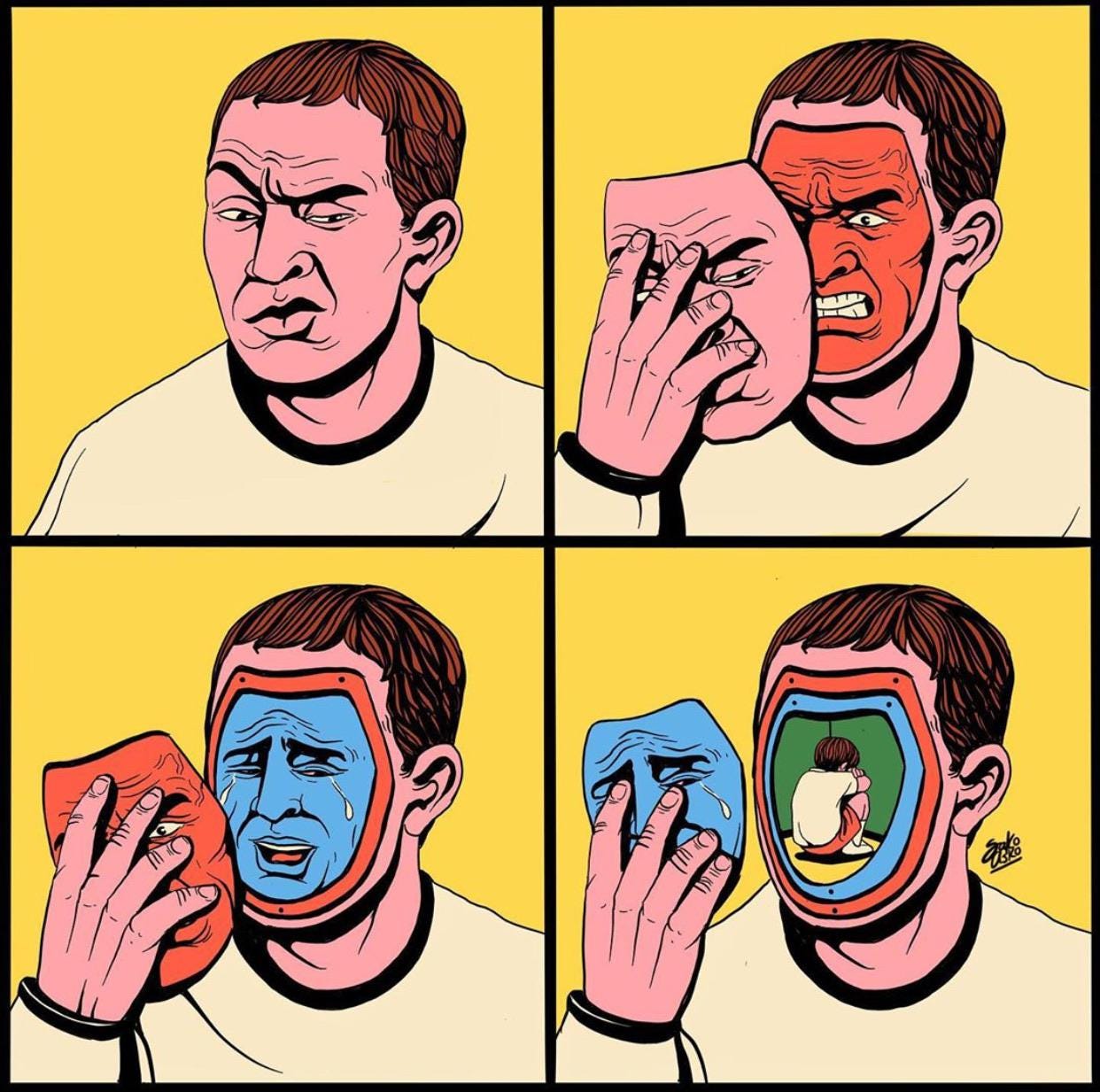
Artist: Sako Asko
ACTION 3: Unpack your conditioning in therapy or with a trusted coach
This is a perfect time to start. I’ve been processing these events with many of my clients and the range of emotions being felt by men is humanizing to say the least. My friend Dr. Audra put together this incredible list of therapists for men across the country, which she’s turning into a website. I have networks in CA and NY that I can tap, so if you’re interested please reach out. The number of men engaged in mental health treatment is increasing yearly and higher than ever before. I have a theory that this increase was in part driven by #metoo and a global call for men to seek help. This is a stat I find encouraging despite the darkness being revealed right now. Men’s therapy groups are another amazing place to unpack this stuff. I’m starting one in Cobble Hill March 18th, but also have leads for others in CA and NY. Reach out.
ACTION 4: consent education
As I mentioned #metoo brought major awareness to consent and the vacuum of understanding around it in our culture. Before that, men and women alike were receiving their education from shows like Mad Men, Sex & The City, Californication, and Entourage. Our abysmal sex ed classes certainly didn’t teach it. Here is a good definition of consent and some instructions on how to engage in conversations. Some other accounts that are helpful are: Comprehensive Consent, Teach Us Consent, and Stories Of Consent.
ACTION 5: repair where you can
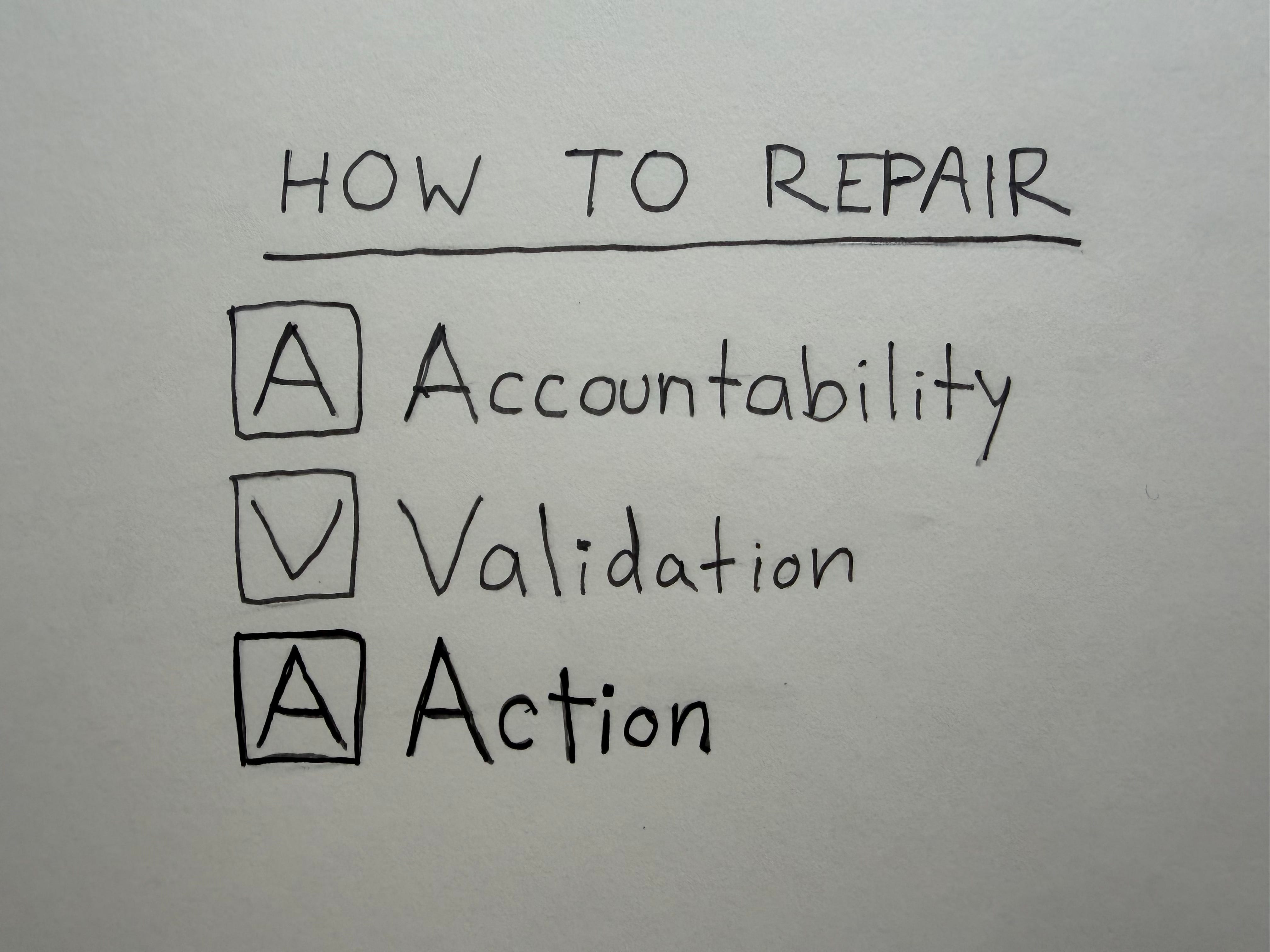
Maybe you have done direct harm to women in your life. Whether it was name-calling, mistreatment, objectification, ghosting, or actual boundary violations. Sometimes repair is possible. Here is a repair framework that may help, but first be sure to get consent to initiate that repair. And get very clear that this repair is for the other person first. Any benefits to you (e.g. guilt relief) should be secondary. You have to detach from the outcome, you may not get the result you wanted, but it’s better to try than not try at all.
ACTION 6: challenge yourself and the men in your life to step up
This is a big and important lift. To do this well is to do it with loving firmness versus shaming. Shaming in my experience will get you nowhere fast. Starting with yourself, with compassion, make an inventory of how you may be participating in objectification or misogynistic culture. Examples could include: excessive porn usage, staring at women, laughing at locker room talk w/ friends, engaging in f*ckboy behavior, and more. I see these as symptoms of addiction, lack of intimacy, and loneliness. You can get sober. A harm reduction approach is one I suggest. Then with your boys: are you having hard conversations with your friends, family, and communities if they are engaging in problematic behavior? I’d bet you have at least one friend or family member that comes to mind. The feedback wheel is my favorite resource on the planet and works for this. My friend Johnny Cole also made a great video about the men’s hockey team modeling what some of this challenging can look like. From experience, this is a scary job, often a thankless job, but it’s one that bolsters your integrity. It’s worth it.
ACTION 7: vote
Vote for people you think are least likely to perpetuate these systems. I know this is getting harder and harder to distinguish, as it’s clear that the Epstein files didn’t discriminate across party lines. But do your best.
Hope this helps.
With love and respect,
Patch
Wow after fielding hundreds of defensive comments from men all week about the Epstein files- this was truly a breath of fresh air to read thank you 🙏🏼
I wish I could like this 100 times