

I watched Inside the Manosphere last weekend and my first impression was a “yeah this is familiar” 🙄, bringing me right back to being an impressionable middle-schooler inundated with this ideology. I mostly felt sad and embarrassed for these influencers, they just came across as remarkably insecure. For their followers even more sad. For the women in their lives and their followers’ lives, angry and protective. For Myron Gaines, just anger. My humanity has limits. But of course this was an edited documentary, Louis Theroux likely wanted us to feel some type of way about everyone in it. Maybe how he felt?
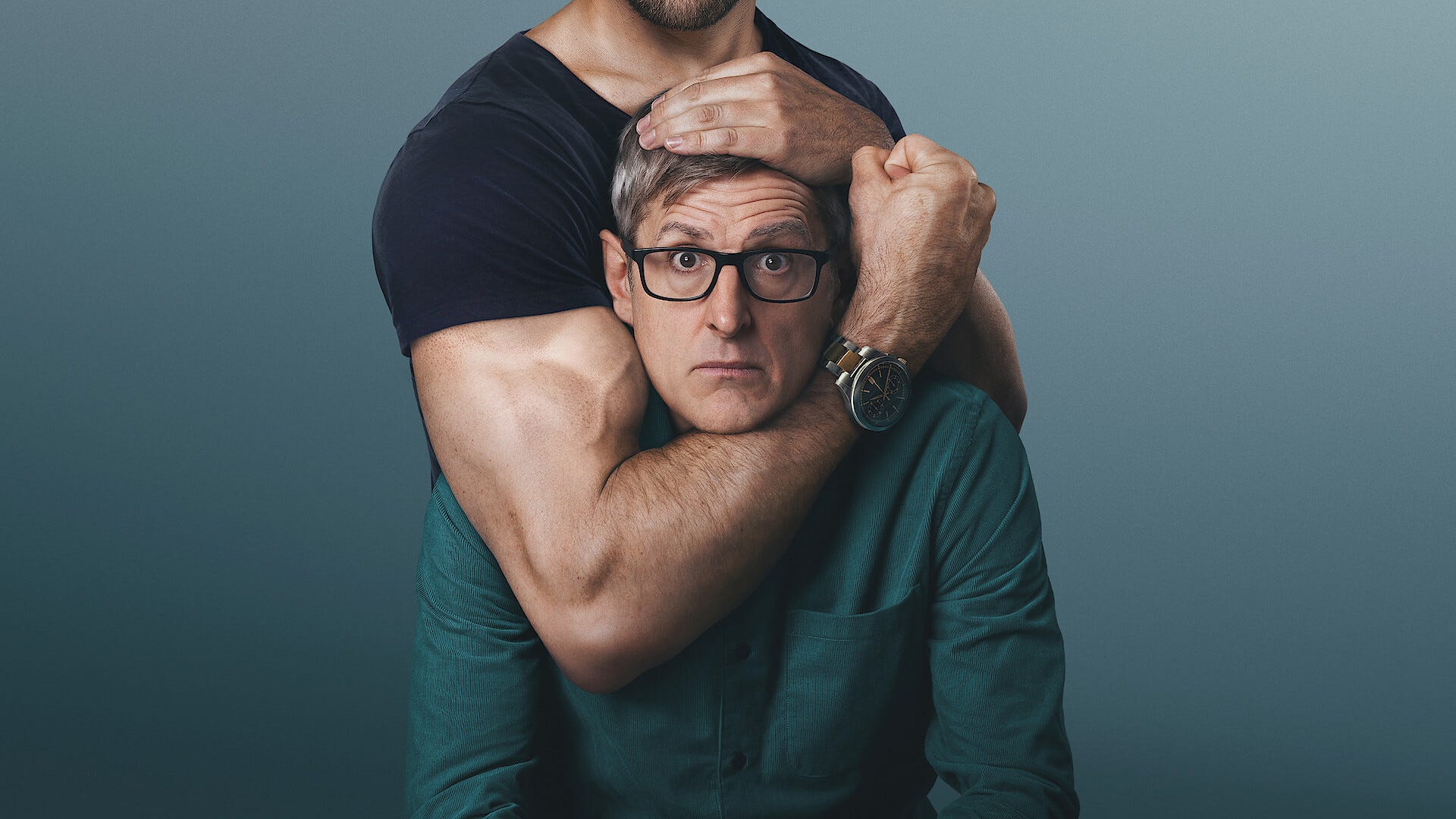
Two things that stood out to me that I think we must learn from: 1.) how clear, simple, and repeatable the meaning was that they were providing for young boys and 2.) that they were offering love (even if disingenuous). Those of us advocating for a “healthier” masculinity have done a great job of telling men what they should not be, but not the best job at offering them a clear alternative. That leaves a giant vacuum that the Manosphere happily fills and will continue to fill until it has a compelling competitor. The results, I think we can see, are devastating.
Ripe for manipulation
Before getting into the above, I want to address why this is so appealing to young boys from my perspective. Two things my wife said on repeat while watching with me were 1.) “I’m so glad you’re not like this” and 2.) “why is this attractive to young boys?” The truth is, I was *kind of* like this in some ways as a tween and teen, but had many protective factors that didn’t let me slip fully into it. But yes, my friend group was notorious for being hypermasculine, so I’ve got some lived experience. This is precisely the time that young boys are socialized into hypermasculine values on the playground, through music, TV, movies, families, and today on social media. In Erik Erikson’s Stages of Psychosocial Development, adolescence (12-18 y/o) is marked by the basic conflict of Identity vs. Role Confusion, with a virtue of fidelity. This is a stage in which boys are learning what it means to be a “man”, who to be loyal to, and what their guiding principles will be. Enter: the Manosphere, monetizing vulnerable lost boys in search of love and community. As a therapist it is clear to me that many of these influencers appear trapped in the emotional maturity of an adolescent, which I suspect is where much of their trauma occurred.
Moreover, these kids consuming the content are helpless from a brain development standpoint - the same reasons that children can’t be tried as adults or legally consent. The irony that these men so righteously “protect” the world from pedophiles, while actively preying on small boys (and girls). There is a moment when HS says, “I never want 13 year olds watching my stuff”. Yeah right. While those kids may not have the most buying power, they are the most easily manipulated and they are watching your content, only to be very loyal consumers later on once fully indoctrinated. Their amygdalas (what controls emotions and fight/flight/freeze) are firing well and with a whole lot of hormones thanks to puberty, but their prefrontal cortex (what controls decision-making, future planning, judgement, impulse control) is not. They don’t have nearly the critical thinking skills or the experience to determine if what they’re consuming is terrible or not. But they are highly emotional, and the Manosphere armed with exceptionally addictive algorithms are targeting their greatest fears (e.g. being dominated, discarded), shame (e.g. having no value, seen as weak, not belonging), sadness (e.g. loneliness), and anger (e.g. “you’re entitled to more and women are to blame”). Pair that with an absent or abusive father, or a troubled relationship with the women in your life, and you’re toast.
In many indigenous cultures, this is the exact time that boys would be (and are) initiated into manhood. They’re given a role of service within the community so that they can be positive contributing members of their society. They feel purpose, belonging, meaning, and love. It’s almost as if this was entirely functional, and what he have now is…savage? A mentor of mine, Dan Doty, has dedicated his life to this work, and many more folks are emerging to fill this void. Father Richard Rohr wrote a book on this, Adam’s Return, that is superb.
It is very clear to me that if there is a sweet spot of where preventative work can be done, it is to be done in adolescence, meeting them where they’re at in their classrooms and third spaces. Ashanti Branch, Dr. Brendan, and Mr. Jason Wilson are some men I know of doing this very necessary work.
Moving on to what I mean about providing a clear alternative to the Manosphere.
What does “mature masculinity”* look like?
I have been loath to prescribe what a version of “mature masculinity” might look for so many reasons. First and most importantly, this is part of what is problematic about ManBox culture, it says there is a “right” and a “wrong” way to be a man, and any deviation from the “right” way means you should be ashamed and you’re a loser - it’s binary and inhumane. Saying “mature masculinity” is the “best” can be grandiose - creating the same hierarchy problem. Second, everyone is wildly different in their gender expression and one way will absolutely never work for everyone. Third, I am a therapist who is not supposed to be biased one way or the other (but I am). Fourth, it’s grandiose to think I have all the answers (I don’t).
That said, I’m going to take the leap because I think more of it is needed. I asked Claude to help me summarize qualities of mature masculinity from some of the most popular books and thinkers on the topic that I know of (I’ve read each book) . 1.) “Iron John” by Robert Bly 2.) “King, Warrior, Magician, Lover” by Moore & Gilette 3.) “Adam’s Return” by Richard Rohr and 4.) “From the Core” by John Wineland. My favorite by far was Adam’s Return by Richard Rohr. Okay, without further ado.
1. Initiated He has passed through fire — loss, failure, grief, humiliation — and let it change him. He hasn’t bypassed suffering or stayed comfortable. Something in him has died and something truer has emerged.
2. Grounded He lives from his core, not his head or his defended shell. He can feel what’s happening inside him, regulate under pressure, and show up with presence rather than performance.
3. Purpose He knows what he’s for. His life has direction — a mission, a calling, a commitment — and that orientation gives him the spine to say no, stay the course, and resist distraction or collapse.
4. Regulated He can be met with chaos, pain, anger, or intensity — from a partner, a situation, a group — and remain open and stable rather than shutting down, escalating, or abandoning the moment.
5. Integrated He has looked at his rage, his hunger, his wounds, his dark impulses, his shadow — and claimed them. He doesn’t project them outward as cruelty or bury them as numbness. The wild energy is integrated, not suppressed or unleashed.
6. Service His life is not ultimately about him. Whether framed spiritually, archetypally, or relationally — he serves. He has been dethroned from the center of his own universe and is oriented toward contribution, legacy, or the sacred.
7. Connected He is in relationship with other men — not just socially, but in genuine witnessing, accountability, and transmission. He has been mentored and mentors others. He doesn’t do the work alone.
8. Open He can disclose, soften, grieve, and be seen in his vulnerability — not as collapse, but as courage. His openness comes from a grounded place, not a desperate one. Strength and tenderness are not opposites for him.
The through-line: mature masculinity is the integration of power and depth — strength in service, presence without armor, and a self that has been forged rather than merely maintained.
I look at these and see a clear map of qualities, values, and behaviors. I find it quite useful and enjoyed evaluating myself against it. Men, like everyone, need a map. And as long as we live in a capitalistic performance-driven culture, they want to know how they are performing. They could use a new report card that’s not based solely in domination-based Patriarchy of the past, nor erasure. Now, one could argue that the above qualities could apply equally to women or non-binary folks, and they could be right. One could also argue that this isn’t much different from the 8 Cs of Self Energy, and they could also be right. Maturity is maturity.
My main addition to the above points is a big one and it draws from a Terry Real quote: “men are not raised to be intimate, they’re raised to be competitive performers.” Lest the above come across as a better performance script (albeit very necessary), I want to be clear that relational skills and relational health must become central to modern mature masculinity - and society in general. We’re still living in a loneliness epidemic and traditional patriarchy is a setup for it, while healthy relationships are the greatest predictor of happiness across the lifespan. This is why I am a relationship therapist for men and couples.
With love and respect,
Patch
*“Mature masculinity” is also often called “healthy masculinity” “positive masculinity”, and/or “integrated masculinity.”
Such an important breakdown. The real masculine identity is exactly the conversation we need more of.
From my own analysis, what I’d add is the nervous system layer underneath it:
Men drawn to these frameworks aren’t weak or broken. They’re nervous systems that never received the signal that vulnerability was survivable. That were taught, early and repeatedly, that emotional needs were dangerous.
The manosphere didn’t create that wound. It found it. Named it. And offered a story that finally made the pain make sense.
The story was wrong. But the hunger underneath it was completely real.
Real masculine identity, the kind that lasts isn’t built on dominance. It’s built on a nervous system that finally feels safe enough to know who it is without a hierarchy to sit in.
That’s the conversation worth having and I love that your article points exactly toward it. 🙏🏼
I explored this from the nervous system angle in a post called “The Lie That Feels Like Truth” if you fancied a read. 😊
Another fabulous article, Patch
The mature masculinity map is a great starting point for discussion