

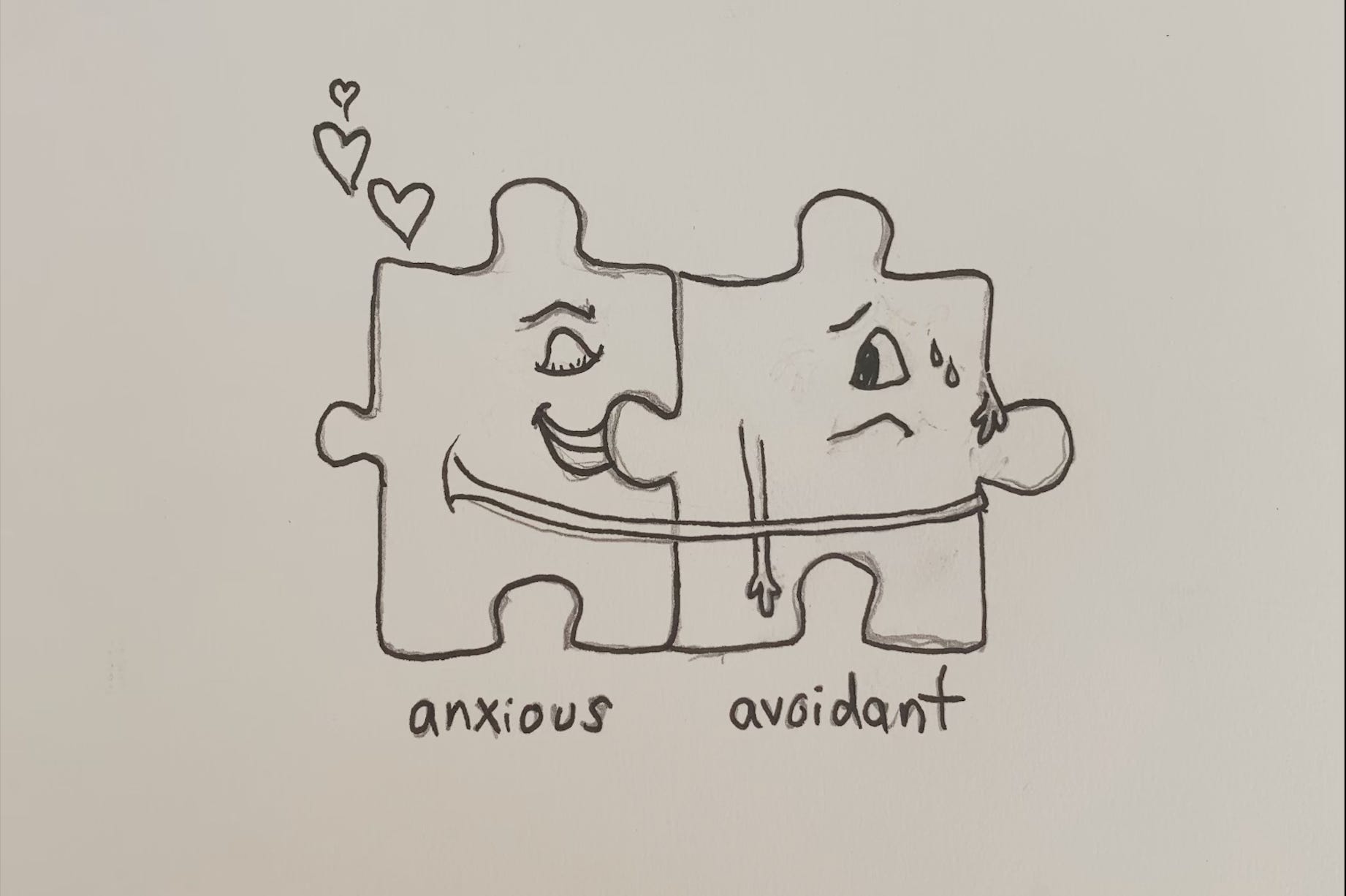
This article is specifically for you avoidant-leaning humans who may feel relationally outmatched by your partners in terms of skill in talking about emotions and needs. It absolutely sucks to feel incompetent in this department. On top of that, your partner is likely mad at you for your incompetence. Which may leave you feeling trapped, ashamed, and like you’d be better off alone - saving everyone the trouble, including yourself.
I’m sorry, because I can’t let you off that easy. Nor would you (or your partner) want me to. As someone who has made it to the other side and become highly competent relationally, I promise you life gets immeasurably better with skills. On the other side of your vulnerability is your freedom. The “oh shit I actually needed to get more vulnerable in order to feel more freedom?” kind of aha that will leave you truly humbled and delighted by that paradoxical trickster we call life. Yes. In most cases, the more skilled you are at sharing vulnerably and taking space healthily, the more your (often anxiously attached or disorganized) partner will feel safely connected to you and loosen their grip, resulting in more freedom for you ✨. Not only that, but if you learn these phrases you’ll feel more free in ALL of your relationships, markedly changing your life.
1. “The story I make up”
“The story I make up is that I’m not allowed to have my own time and space”
“The story I make up is that you’re trying to control me”
“The story I make up is that if I share my emotions you’ll think I’m weak”
The reality is that avoidant-leaning humans make up A LOT of stories, sometimes stories about the future 20 years from now which are absolutely impossible to predict. These are stories your brain is telling you in hopes of protecting you, often based on real past experiences that hurt you.
Anytime you have an assumption (aka story), just use this phrase. The beauty of it is that instead of coming out like an accusation “you are trying to control me!”, which will almost certainly cause defensiveness, you take responsibility for the story you’re making up. It’s a game changer.
2. “I feel X”
I remember the first time a therapist asked me what I felt and I looked back at him like a deer in headlights not quite sure what he meant. “I’m fine. What do you mean?” I’m sure I said something like that, only underneath was A LOT. Studies show that avoidant children actually experience at least as much anxiety as their anxiously attached counterparts, they just hide it because they learned early on that they’d be rejected if they showed emotions.
The 5 challenging emotions I teach avoidant leaning folks and men in my practice are Anger, Shame, Sadness, Fear, and Guilt. The go to emotion avoidants feel the most is shame, whether they know it or not. This is the emotion of the freeze response. Avoidants generally also tend to not be skilled in communicating their anger. So it either comes out passive-aggressively or not at all.
Anyhow, those stories you’re telling yourself are likely making you feel one or more of these emotions. So you can pair these first two phrases together like this:
“The story I tell myself is that if I share my emotions you’ll think I’m weak. The thought of that is scary and embarrassing.”
3.“I need/want X”
If you grew up in a home with domineering parents where you were to be seen and not heard, or you grew up with parents who were similarly dissociated from their own needs or wants (e.g. “we don’t have needs in this house, we just do responsible things!”), it’s likely that you have very few clues as to what you need or want in life, in relationship, or in the moment. This may leave you “going with the flow”, always feeling subjugated to what others want to do, or simply avoiding human interaction so that you can go at your own pace without influence from those people who always seem to know what they want and demand it from you!
All of those options sound not great, eh? One really great question for tuning into what you need or want is “does this give me energy or does this deplete me?” Energy you want, depletion you don’t. I took that from a book called Designing Your Life, which is also great for career planning and discovering your life’s purpose.
In order to get what you want in life - and relationships - you need to know what you need or want. Annoying, I know 😏
So to layer in these first 3 phrases:
“The story I tell myself is that if I share my emotions you’ll think I’m weak. The thought of that is scary and embarrassing. I need to know that you won’t judge me. Can you agree to try to be sensitive to that?”
I recognize this whole sentence may sound like the most mortifying or corny thing on the planet to say. And…relationships require scary, corny, and deep. But I promise you that if you’re able to get comfortable with this stuff, your confidence will go through the damn roof.
Oh, and to land the plane. If that need/desire is met, you will in turn feel more connected and less judged by your partner. You’ll feel released from your fear and shame, resulting in feeling more free. All of that will give you more energy. Relationships go from something to avoid to something that gives you energy. Bam! Yes please. Let’s go.
All of these can be found in the feedback wheel, here.
4.“You’re right”
Accountability is the antidote to defensiveness. While all attachment styles can be defensive, it’s a go-to for avoidants. To run, hide, and put out a stiff arm. I wish it worked, but it only makes things worse. So, even if it feels wildly unfair that your partner is “criticizing” you, I want you to focus on what you can control: any grain of truth in what they’re saying. Then rather than defend every point, pick the one grain of truth to say they are right about. Then ✨ watch their anger dissipate, their grip loosen, and their shoulders relax. This has the power to melt your aggressor. It validates that they have a point. You don’t have to agree with everything they said. In fact, you can disagree with five out of the six things they said, but start with what you agree with and you’ll be in MUCH better shape. For example, “You’re right that I can be defensive and I also am working on that. I agree. I don’t agree with the other things you said, but I agree with that.” That’s an entry point to agreement, repair, collaboration. That’s turning towards intimacy. And it will help you feel less helpless, afraid, defensive, and on the run. Own it.
5.“I love you and I need a minute to regulate”
Remember when I said that shame was one of the go-to emotions for avoidants? And that it’s the language of the freeze response? What this looks like in practice is you shutting down and turning into a stone mid conversation. The Gottman’s call this stonewalling. Sometimes it’s intentional, sometimes it’s completely involuntary. Ever notice that if this happens, you actually have trouble thinking and producing sentences? This is actually the blood leaving your brain to prepare for death: the freeze response. You are flooded and you need a damn break. Typically an anxious-leaning partner will read this like an abandonment and not receive it well. Thus, it is best that you pre-establish up front that in fights you both are allowed to take time outs and follow these guidelines. The person asking for a time out needs to propose the time to finish the conversation, too. You don’t just get to weaponize time outs and unilaterally end every argument without coming back to it.
6.“I can’t control you, nor do I want to, but if you continue to do that I’m going to do this”
Terry Real summarizes avoidant recovery as simply, “learning to negotiate”. All of the above equips you with the tools to understand what you are actually negotiating for (emotions/needs/wants) and how to effectively speak to them. Due to your upbringing of either being entirely flattened by overbearing/abusive caregivers or modeling after completely walled off caregivers, avoidants tend to be terrible at setting boundaries. They know only two modes: 1.) you have complete control over me and my only mode of protection is running 2.) I will never let you in or be in relationships with others (aka walls).
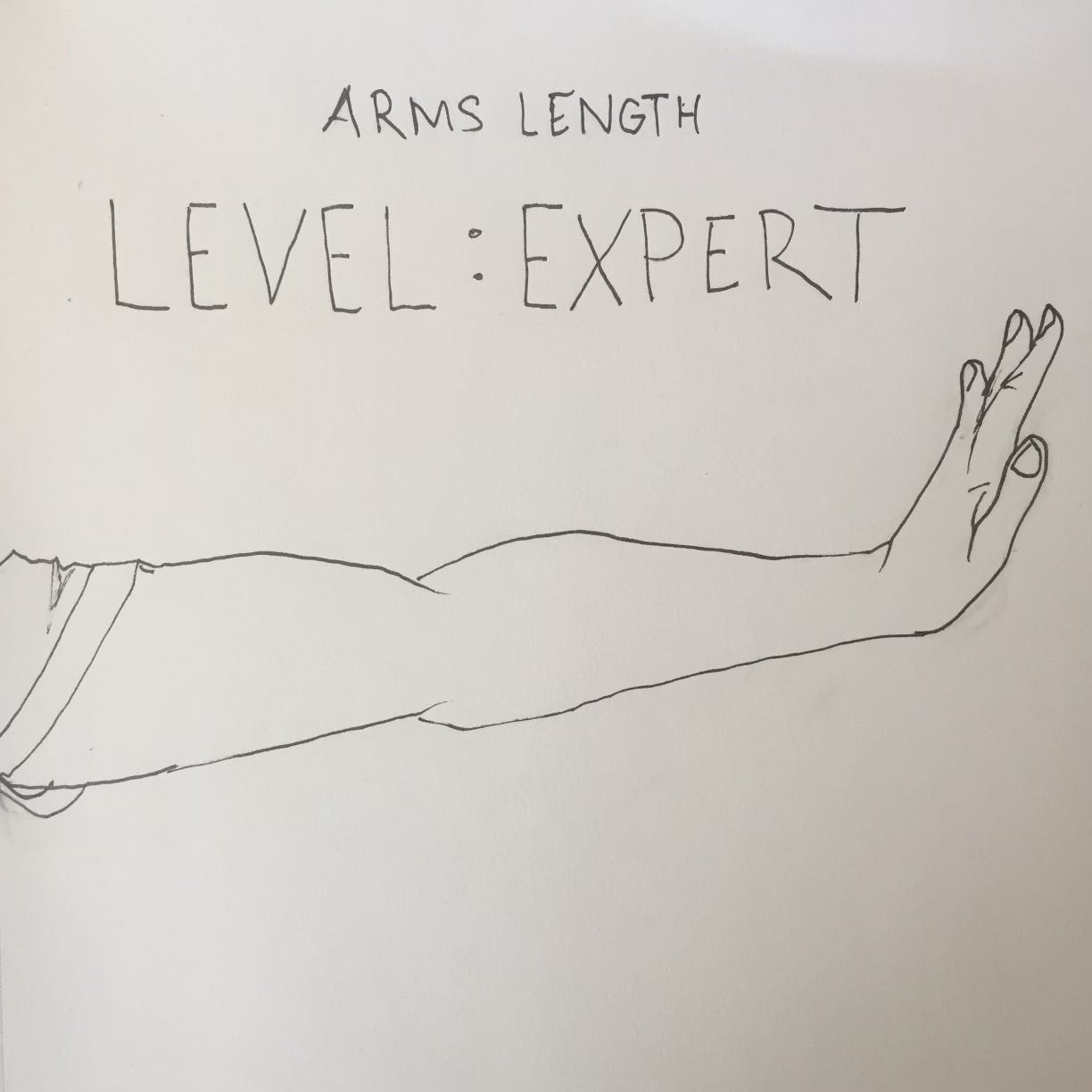
You need something in the middle. Something that says “this is the distance at which I can love you and me simultaneously.” Aka, boundaries. The most simple form of a boundary according to me is two letters: NO. Many folks need to start there, attune to what their yeses and their nos are (remember the question “does this give me energy or deplete me?” this question helps with that, too). But beyond a simple no is negotiation and boundary setting.
Negotiation
I can’t give you this, but I can give you that.
I’m not going to go to 4 family events with you this week, but I’d love to go to two.
Boundary setting
A real boundary involves a need or a request AND a consequence if that need or request is not met.
To wrap all of this up. Say you used our phrase from before:
“The story I tell myself is that if I share my emotions you’ll think I’m weak. The thought of that is scary and embarrassing. I need to know that you won’t judge me. Can you agree to try to be sensitive to that?”
Say you used that phrase and your partner maybe agreed at first, but then you noticed they smirked, laughed at, or mocked your emotions after you shared them. That is where a boundary becomes useful. Something like this, “I can’t control you nor do I want to. But if you mock me when I share my emotions, our conversation will be over.”
And that consequence can ladder up to greater degrees of severity. E.g. I’ll take some extended distance. I won’t share emotionally with you. I won’t spend time with you. These are all perfectly reasonable boundaries for someone mocking you.
These are relationship skills. We all need them. And the point is greater connection, greater safety, greater freedom for all.
With love and respect,
Patch
* This article is for psychoeducational purposes only. Each of these phrases/skills takes a great deal of practice to do well and I recommend learning them with a therapist or coach. There’s a lot of nuance and caveats for every unique individual and couple that are impossible to capture in an article.
Thanks for sharing these really helpful phrases. I guess the bottom line is how an avoidant can be more vulnerable, giving more of themselves to the anxiously attached partner, in the hope they feel settled enough to loosen their grip on the avoidant. Sounds simple but not at all, given the depth of these attachment injuries and wounds.
Hello! What a great article describing the experience of those with avoidant attachment. I’ll be sharing it with clients who want some insights and tools. Thanks, Patch